
What if the most powerful destination you visit this year doesn’t shout, sparkle, or go viral — but simply waits for you in silence?
Arouca doesn’t shout.
It doesn’t beg for attention. It doesn’t need massive crowds, filters, or hashtags. Instead, it
waits. And those who arrive — with open eyes and an unhurried spirit — are rewarded with one of Portugal’s most quietly majestic landscapes.
This isn’t just a scenic getaway. It’s a portal into time, geology, culture, and stillness. From prehistoric rock formations to wind-carved mountain peaks and monastic silence, Arouca doesn’t perform. It reveals.
Where Stone Tells the Past
Arouca is home to the Arouca Geopark, a UNESCO-recognized landscape rich in geological treasures. But these rocks aren’t just objects of study — they are the bones of the Earth’s memory.
Walk through the Pedras Parideiras, where stones seem to “give birth” to other stones, and you’re touching phenomena seen nowhere else on Earth. Hike among ancient schist cliffs or along fossil-lined trails, and suddenly time expands. You’re not just seeing landscapes — you’re seeing epochs.
Every stone tells a story. Of oceans that once covered this land. Of volcanic eruptions and tectonic shifts. Of life millions of years old. It’s humbling. Grounding. And deeply moving.
History in the Heart of the Valley
Amidst this rugged natural power, you’ll find one of Portugal’s most peaceful architectural landmarks: the Mosteiro de Arouca. Founded in the 10th century and expanded by Cistercian nuns, the monastery is a symbol of inner peace and lasting devotion.
Inside, the air is thick with history. Ornate altars. Handwritten manuscripts. Ancient musical instruments once played during candlelit prayer. The cloisters surround you in stone and light, and it’s impossible not to slow down.
It’s a reminder that not all sacred spaces are wild. Some are built — with patience, purpose, and faith in something eternal.
When Nature Writes in Wind
From the heart of the valley, head up to the Serra da Freita and the Frecha da Mizarela, Portugal’s tallest waterfall. Here, nature trades detail for drama.
You stand above the valley as clouds snake through the hills. Wind rushes across the plateau, and the views stretch toward infinity. On clear days, you can see the shimmer of the Atlantic in the distance. On foggy ones, the landscape becomes dreamlike — silent, shifting, otherworldly.
There are no loud crowds. No rush. Just the sound of water crashing into rock, the brush of wind on your skin, and the sense that you’re somewhere ancient and rare.
Why Arouca Feels Different
Arouca doesn’t try to impress you. And that’s exactly why it does.
There’s no performance here — just presence. No spectacle — only substance. What you find isn’t a curated experience. It’s a living, breathing landscape that has existed long before you — and will continue long after.
You don’t just visit Arouca. You feel it. And it stays with you.
Want to Stand Somewhere That Changes You?
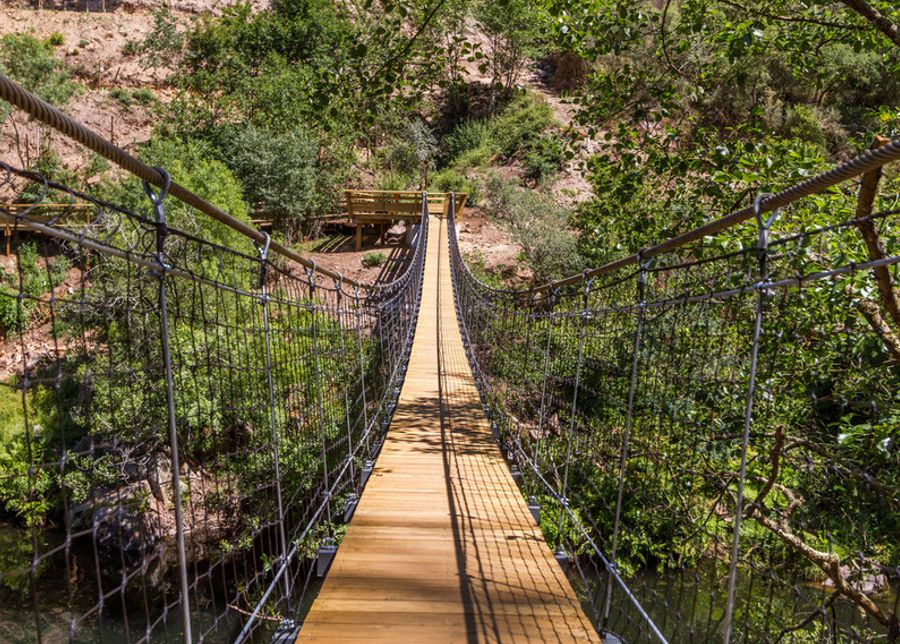
Join us on the Arouca 516 & Paiva Walkways Tour — a journey through Portugal’s most powerful silences, where the Earth remembers, and you do too.
Take a Detours!
Common questions
Is Arouca just about the bridge and walkways?
Not at all. While the 516 Bridge and Paiva Walkways are iconic, the region is also home to geological wonders, waterfalls, ancient monasteries, and mountain landscapes worth exploring.
How do I get to Arouca?
Arouca is about 1.5 hours from Porto by car. There’s limited public transport, so we recommend visiting with a guided tour for the full experience.
Is Arouca good for slow travel?
Yes — it’s perfect. Arouca rewards those who linger, observe, and explore with curiosity rather than a checklist.

